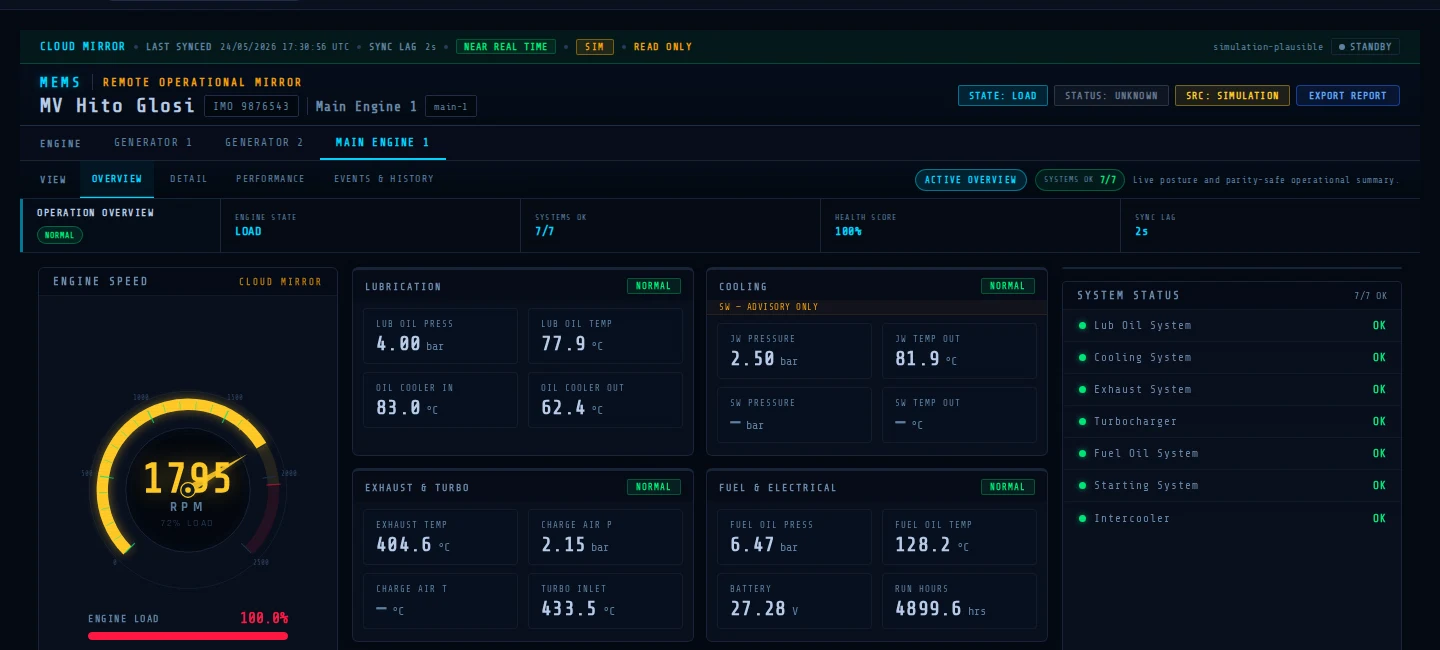
Cloud Dashboard
Cloud Dashboard demo to experience office-based vessel monitoring.
Open Cloud Demo
Marine Engine Monitoring System
MEMS helps engine crew and office teams monitor vessel engine conditions, alarms, operational history, and abnormal conditions through an onboard Edge Box and office Cloud Dashboard.
Powered by PT. Hito Global Sinergi · Technology Support by ABSANA.ID
System Flow
With MEMS, engine crew can monitor vessel engine conditions onboard, while the office receives faster and better-documented operational visibility.
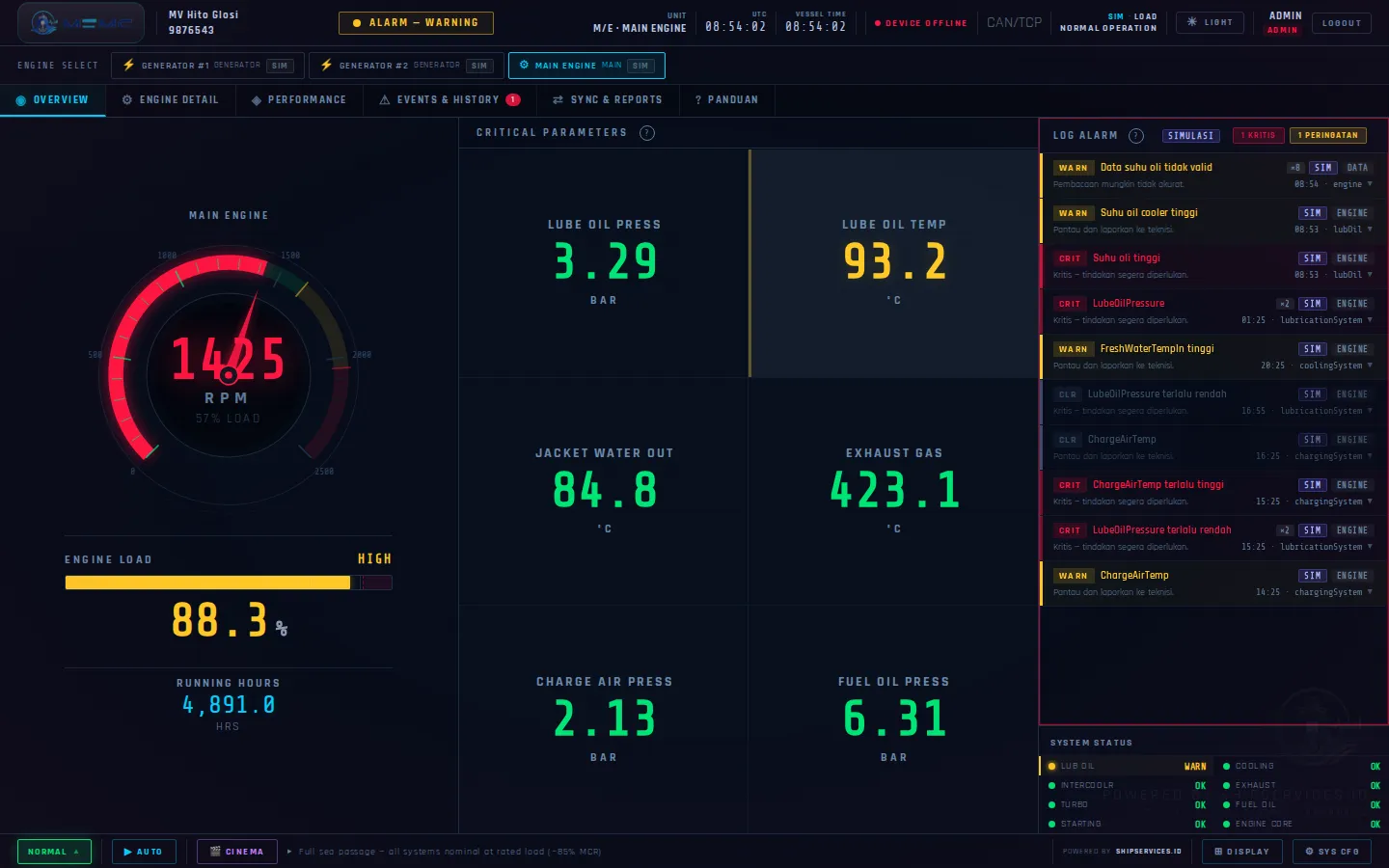
The Edge Box acts as the local monitoring center onboard. Engine crew can still view the data locally, and it can be sent to the office when connection is available.
Edge & Cloud
One system for onboard crew needs and office monitoring.
MEMS reports are telemetry-based technical supporting documents, not port clearance or statutory documents.
Open Cloud DemoReal Vessel Conditions
Every vessel has different engines, panels, sensors, and connection conditions. MEMS is designed to be implemented gradually based on vessel assessment.
For vessels that are not fully digital, MEMS can be implemented gradually. Data can be read from engine panels, additional sensors, analog converters, Modbus, NMEA, or other gateways based on vessel condition.
Data can be read from existing panels when access is available.
Additional sensors or converters can read analog engine parameters.
For older panels, Modbus or NMEA gateways can bring data into MEMS.
Integration method follows vessel assessment results.
When internet is unavailable, the local dashboard keeps running onboard. Engine crew can still monitor engine condition, while data can be sent to the Cloud when connection returns.
Data can be sent to Cloud. The office can view vessel condition.
Data remains visible and stored locally. Crew can still monitor the engine.
Local data can be sent to Cloud when connection returns.
Monitoring Scope
Displayed parameters can be adjusted based on engine type, available panel, sensors, and vessel operational needs.
* Fuel Rate is estimated when a real fuel flow sensor is not installed.
Optional scope is confirmed after vessel assessment.
In addition to the main parameters, MEMS can be adjusted to read additional engine parameters from engine panels, available sensors, or vessel engine gateways based on assessment.
Depends on engine signals, sensors, engine panel, and onboard integration conditions.
Actual parameters depend on engine type, sensors, existing panel, and implementation needs.
About MEMS
MEMS is a marine engine monitoring system that helps onboard crew and office teams monitor main engine, generator, pressure, temperature, alarms, operational history, and abnormal conditions. The system can run locally through an onboard Edge Box and connect to the Cloud Dashboard when connection is available.
Demo Access
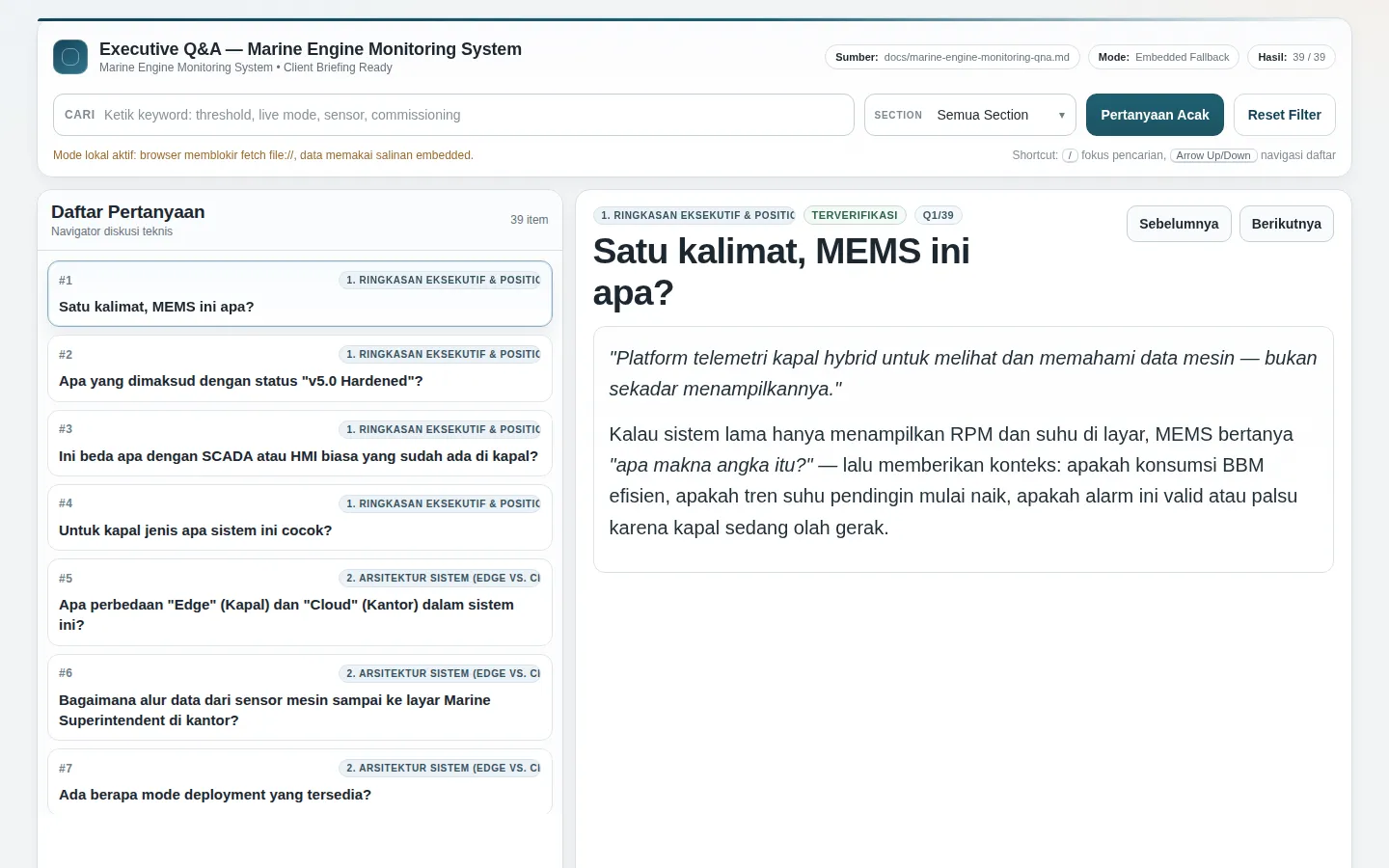
The demo area is prepared to view office monitoring, onboard local dashboard, and MEMS implementation Q&A material.
Cloud Dashboard demo to experience office-based vessel monitoring.
Open Cloud DemoEdge Dashboard demo to experience local monitoring for engine crew and onboard technicians.
Open Edge DemoTechnical explanation and common MEMS implementation questions.
Open Q&AFAQ
Short answers to common questions from vessel owners, superintendents, onboard technicians, engine crew, and office teams.
Yes. For vessels that are not fully digital, MEMS can be implemented gradually. Data can be read from existing engine panels, additional sensors, analog converters, Modbus, NMEA, or other gateways based on vessel condition.
Yes. The Edge Box onboard keeps running and displaying local data when internet is unavailable. Engine crew can still monitor engine conditions. Local data can be sent to the Cloud when connection returns.
The Edge Box is a local monitoring unit installed onboard the vessel. The Edge Dashboard is used by engine crew and onboard technicians to view engine conditions directly. The Cloud Dashboard is an office dashboard used by owners, superintendents, and management to monitor vessel conditions remotely.
Monitored parameters can include RPM, Engine Load, Running Hours, Oil Pressure, Oil Temperature, Coolant Temperature, Fuel Consumption, Alarm Log, Historical Trend, Operating Mode, and other parameters based on engine type, sensors, existing panel, and vessel operational needs. Actual scope is confirmed after vessel assessment.
Yes. MEMS provides a Port Arrival Engine Condition Summary, a telemetry-based technical supporting report that helps the vessel team, owner/operator, Chief Engineer, technical superintendent, or port agent review the latest engine condition before arrival or berthing operations. It includes last-known engine condition, critical/warning alarms, abnormal event summary, and technical readiness notes.
This report is not a port clearance document, harbour master submission, statutory record, class document, Engine Log Book, or Oil Record Book. Operational decisions remain the responsibility of the vessel's Master and engineer officers.
Implementation Discussion
For demos, vessel assessment, sensor integration, deployment, or MEMS implementation partnership, please contact PT. Hito Global Sinergi or ABSANA.ID.
Primary contact for vessel needs, field assessment, proposals, and MEMS implementation.
Technology support for the MEMS platform, software integration, and system installation.